
Tooth Extractions Arlington Heights
When the Last Resort is the Best Solution

Tooth extractions are never the first option when it comes to treating severely decayed or damaged teeth. Dr. Ernie or Dr. DeHart will always attempt to fix the issue with more conservative forms of restorative dental care. However, if it doesn’t appear that dental crowns or root canal treatment are sufficient, we will likely move on to the last resort of recommending tooth extraction in Arlington Heights. Keep reading or schedule an appointment at our office to find out why we might suggest this emergency dental treatment.
Why Choose Costello & DeHart Dental Excellence for Tooth Extractions?
- Patient Comfort & Safety Are Our Top Priorities
- Advanced Dental Technology Used for Optimal Precision
- 50+ Years of Serving Arlington Heights Residents
Reasons Why Tooth Extractions Are Necessary
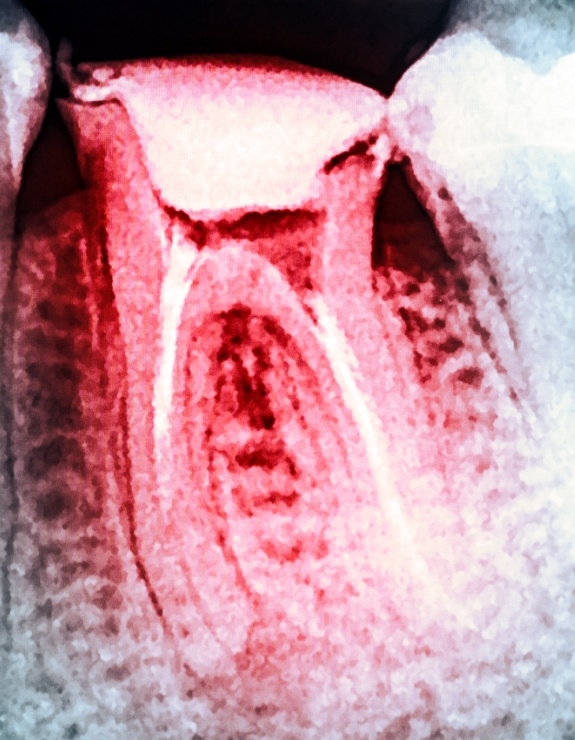
When faced with a decayed or damaged tooth, there is a good chance that another form of treatment will be recommended; however, if we find that results are unsuccessful and your oral health remains at risk, we will suggest removing one or more of your natural teeth.
Here are just a few reasons why this treatment option is likely to be recommended:
- Your child’s baby tooth will not fall out on its own, and the permanent tooth needs room to erupt.
- Your badly decayed tooth is posing a threat to nearby healthy teeth.
- You require orthodontic treatment, but need to have one or more teeth removed to ensure adequate space for movement.
- You have suffered severe facial trauma resulting in a badly broken tooth that cannot be saved.
- You are experiencing advanced gum disease, causing one or more teeth to become loose.
The Process of Removing a Tooth
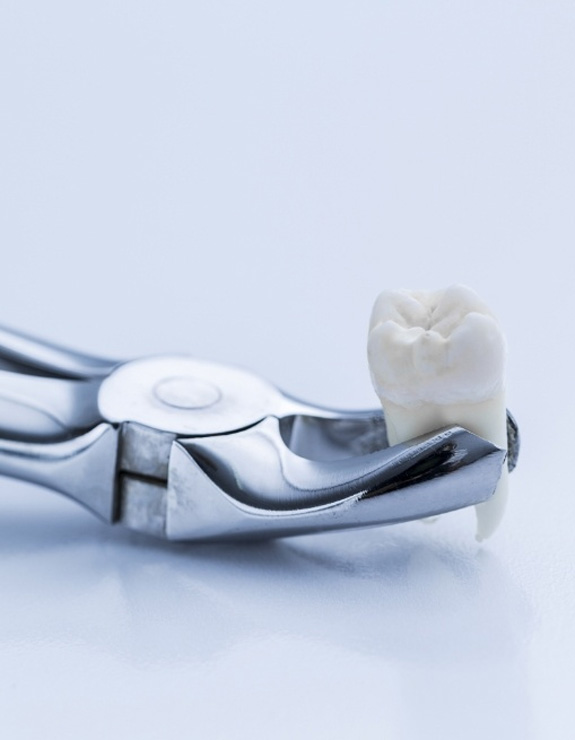
There are two types of tooth extractions in Arlington Heights: simple and surgical. With simple extractions, we grip the tooth and rock it loose until it’s ready to be removed. With surgical extractions, we need to create a small incision in the gums first to access the tooth. Then, we can remove it section by section before tending to the extraction site. In both cases, the first step is always to numb your mouth. That way, you don’t feel any pain while we are working to remove the tooth or teeth in question.
Tooth Extraction Aftercare

Following your tooth extraction, our team at Costello & DeHart Dental Excellence will provide you with a detailed list of aftercare instructions, including:
- Changing the gauze as needed
- Taking prescribed or OTC pain medication as directed
- Sticking to a liquid diet for the first 24 hours (without a straw)
- Brushing and flossing carefully around the extraction site
- Keeping your head elevated, even while you sleep
- Not exercising, smoking, or spitting
Around the three-day mark, you should start to feel better. If that’s not the case, or the symptoms you’ve been experiencing are getting worse, then reach out to us right away.
Understanding the Cost of Tooth Extractions
A tooth extraction can alleviate aches and help protect your dental health, but your might avoid scheduling your procedure if you’re concerned about the cost. It’s normal to wonder how much you might pay for this service, and our team is happy to provide a detailed estimate after we’ve examined your condition and know what’s needed to remove your troublesome tooth.
Continue reading to learn more about how pricing is determined and how our practice in Arlington Heights helps make procedures more affordable!
Factors That Can Affect Tooth Extraction Cost
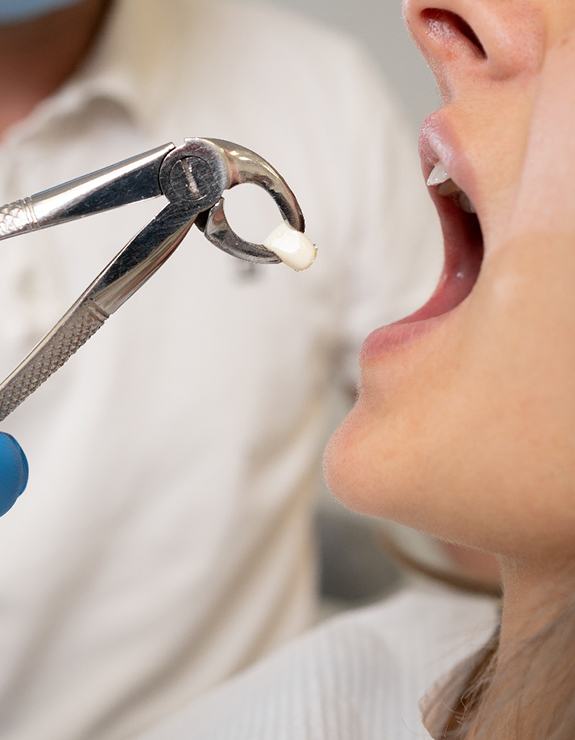
You might not pay the same amount as someone else to have a problematic tooth removed because the cost depends significantly on your unique circumstances. A few different factors can potentially affect the rate, including:
- The number of teeth being treated. Those having several teeth taken out can probably expect to pay more than someone requiring a single removal.
- Where the tooth is located. Molars in the back of your mouth have additional roots and are harder to access, and might require a surgical extraction, increasing your invoice.
- The severity of your condition. If a specialist, such as an oral surgeon, is required to assist with your treatment, their services must also be paid for.
- Types of restorations. Replacement teeth, such as dentures, dental bridges, and dental implants each have their own pricing structures.
Does Dental Insurance Cover Tooth Extractions?

Dental insurance policies can often be an effective way to reduce out-of-pocket expenses for everything from routine appointments to more complex procedures, and many of them cover about 50% of the cost of tooth extractions. However, every plan is different and there are no guarantees, so it’s worth checking the details to verify what’s included.
If you’re unsure how to find the necessary information or would like assistance with insurance forms or claims, please contact our office. Our staff are familiar with various insurance providers and are happy to help you maximize any available benefits.
How to Make Tooth Extractions Affordable

Our compassionate team believes that everyone deserves to have access to quality dental procedures to protect and preserve their smiles, regardless of their current financial situation. If you’re uninsured or are overly concerned about the cost of your extraction, you might benefit from one of the following options:
- In-House Membership. For a flat annual fee, you gain access to routine exams, cleanings, which can potentially help reduce out-of-pocket expenses for your extraction.
- Flexible Financing. We also welcome offer flexible payment packages that allow you to divide your total invoice into more manageable installments that are paid over a designated period, often with little to no interest.
Tooth Extractions FAQs
Does getting a tooth extracted hurt?
From preventive treatments to cosmetic upgrades, it is not uncommon for patients to be hesitant to commit to treatment out of fear that their procedure will hurt.
The good news is that whether you’re getting one tooth pulled or more, the first step will always be to numb your mouth.
After your tooth extraction in Arlington Heights, some soreness and discomfort are to be expected, but following your aftercare instructions to the letter can help reduce discomfort, prevent infection, and promote healing.
Should your pain worsen instead of improving, or if you begin exhibiting signs of infection such as a fever, please contact us right away.
Is there an alternative to a tooth extraction?
While today’s tooth replacement options like dental implants are incredibly lifelike and durable, you can rest assured that your dentist’s top priority will always be to save your natural teeth.
Ultimately, the answer to whether there’s a suitable alternative to extraction really depends on why your dentist is recommending the tooth be removed in the first place. For example, if it’s due to extensive decay, then a root canal may be an option. If it’s a result of periodontal disease, root scaling and planing might help restore your oral health. However, if your dentist has recommended an extraction, these may not be viable solutions.
If your dentist has determined that an extraction is necessary to restore your smile and bite, you can be confident that this is truly the best way to restore your strong, healthy, pain-free smile.
What’s the difference between tooth extractions and wisdom tooth surgery?
While both involve removing a tooth, wisdom tooth surgery and tooth extractions are two different procedures.
One of the biggest differences between the two is that wisdom tooth surgery is designed to remove the third and final set of molars, while a tooth extraction can be done on any tooth that is either irreparable or causing overcrowding.
Another key difference is that wisdom tooth extractions are often surgical procedures because the tooth must be removed from below the gumline or may be impacted.
Can I leave the space empty after a tooth extraction?
If your dentist is extracting a tooth toward the back of the mouth, it is not uncommon to believe it doesn’t need to be replaced. After all, if nobody can see it, why bother? In reality, however, your teeth do so much more than just look pretty in your smile. They also help you chew food completely and enunciate your words properly. In fact, even missing just one back tooth can make these functions difficult, leading to a variety of problems like poor nutrition and indigestion. Furthermore, since your tongue makes a series of distinct movements against the backs of your teeth to form words, missing a tooth toward the front of your mouth may even cause a lisp!
Thus, your dentist recommends that once you’re done healing from your extraction you schedule an appointment to find a suitable tooth replacement, yes, even if the empty space can’t be seen when you smile!