
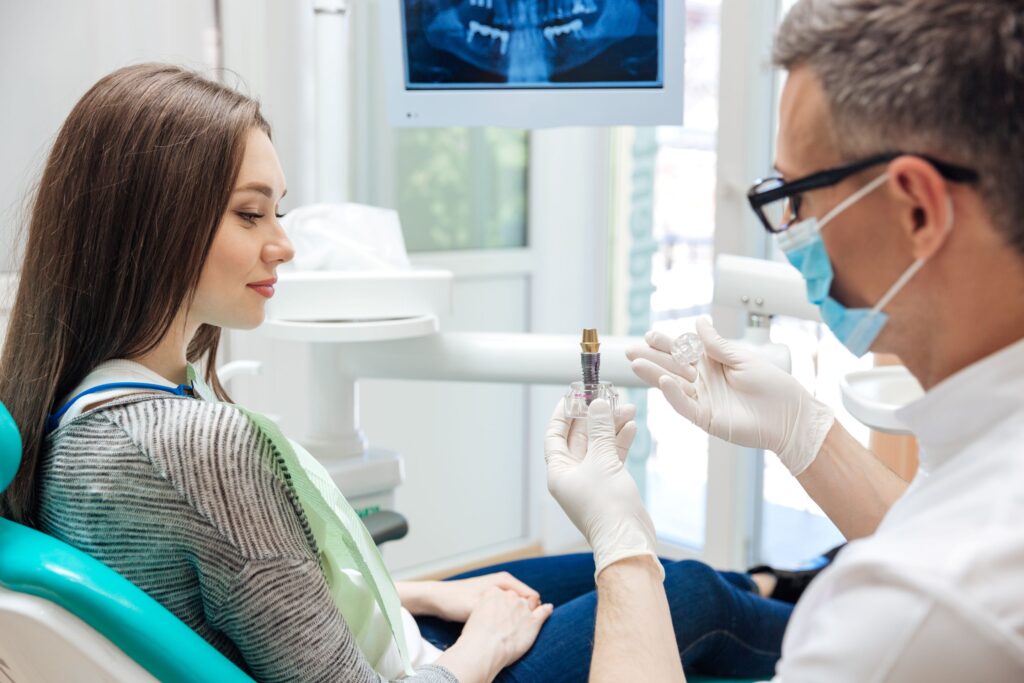
Many experts consider dental implants the ideal way to replace missing teeth because of their unique advantages. Unlike dentures and dental bridges, these restorations are embedded directly into your jaw and eventually fuse with the bone for a more permanent and reliable solution for tooth loss.
Although this procedure has an incredibly high success rate of more than 90%, you might still experience complications if you don’t take proper precautions. Continue reading through the following 3 frequently asked questions and responses to learn more about what to expect from recovery and how to avoid potential problems!
Question #1: How Much Bleeding is Considered Normal?
This treatment involves surgically placing the required number of implant posts directly into your jawbone, which can cause bleeding. Your dentist will apply gauze over the site after your procedure, but you will need to change it periodically to prevent a potential infection.
It’s normal to experience light bleeding or oozing for up to several days afterward. Thankfully, this is typically minimal and, in many cases, resolves on its own within 48 to 72 hours. However, if you notice persistent bleeding that seems heavy, please contact your dentist’s office so they can ensure you’re healing as intended.
Question #2: How Can I Manage Discomfort?
You’ll be numbed and/or sedated for your oral procedure, so you likely won’t have to worry about potential discomfort until after the medications wear off. Then, it’s natural to feel sore and swollen for several days. Associated aches often peak around the third day after your surgery, then gradually dissipate.
If you’re feeling achy, you might try holding an ice pack to the affected side of your face for about 10 to 15 minutes to induce a temporary numbing effect. It’s also often safe to take the recommended dosage of over-the-counter solutions, such as acetaminophen or ibuprofen, for some much-needed relief. If you’ve been prescribed anything, such as antibiotics or pain medication, please take them exactly as directed to avoid potential complications.
Question #3: What Should I Eat After My Procedure?
Most experts suggest sticking to a liquid diet, then graduating to soft foods as you feel able, but it’s best to avoid anything too hot, hard, or spicy, which can damage the blood clot that must form at the site to heal or irritate your already-tender tissues.
Popular options include yogurt, blended smoothies, applesauce, cooked pasta, scrambled eggs, and mashed potatoes. Once you’ve recovered completely, you can enjoy a wider variety of wholesome foods to support your oral and overall health, as your new tooth fuses with your jaw to become a more permanent part of your mouth.
Your dentist might provide slightly different instructions based on your unique circumstances, and following their directions is the best way to heal as effectively as possible while avoiding potential problems after your implant surgery.
About the Practice
Patients at Costello & DeHart Dental Excellence benefit from three providers who are passionate about helping them build and maintain beautiful, healthy smiles. Dr. Costello, Dr. DeHart, and Dr. Carr collaborate to provide a comprehensive menu of services, including dental implant placement and restoration, conveniently under one roof. Their expertise is paired with advanced technology to deliver more comfortable and accurate results meant to last. If you need to replace missing teeth, you can request an appointment on the website or call (847) 259-1111.